
ડિજિટલ ઇલેક્ટ્રોનિક્સની દુનિયામાં તમારું સ્વાગત છે! જ્યારે એનાલોગ ઇલેક્ટ્રોનિક્સ સતત બદલાતા સિગ્નલો સાથે કામ કરે છે, ત્યારે ડિજિટલ ઇલેક્ટ્રોનિક્સ નિરપેક્ષતાની દુનિયામાં કાર્ય કરે છે: ચાલુ (ON) અથવા બંધ (OFF), ઉચ્ચ (HIGH) અથવા નીચું (LOW), સાચું (TRUE) અથવા ખોટું (FALSE). કમ્પ્યુટરની ભાષામાં, આપણે આ સ્થિતિઓને બાઈનરી નંબરોનો ઉપયોગ કરીને દર્શાવીએ છીએ: 1 અને 0.
લોજિક ગેટ્સ શું છે? (What are Logic Gates?)
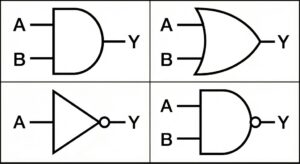
લોજિક ગેટ એક આદર્શ અથવા ભૌતિક ઉપકરણ છે જે બુલિયન ફંક્શનનો અમલ કરે છે. તે એક અથવા વધુ બાઈનરી ઇનપુટ્સ (0 અને 1) લે છે અને ચોક્કસ નિયમોના આધારે એકલ બાઈનરી આઉટપુટ ઉત્પન્ન કરે છે.
તમે લોજિક ગેટ્સને કમ્પ્યુટરના મૂળભૂત નિર્ણય લેનારા તત્વો તરીકે વિચારી શકો છો. હજારો અથવા અબજોની સંખ્યામાં આ ગેટ્સને જોડીને, એન્જિનિયરો જટિલ પ્રોસેસર્સ બનાવી શકે છે જે 3D વિડિઓ ગેમ્સ રેન્ડર કરવામાં અથવા વિશાળ માત્રામાં ડેટાની ગણતરી કરવામાં સક્ષમ છે.
ગેટ કેવી રીતે કાર્ય કરે છે તે સમજવા માટે, આપણે ટ્રુથ ટેબલ (Truth Table) નો ઉપયોગ કરીએ છીએ. ટ્રુથ ટેબલ ઇનપુટ્સના તમામ સંભવિત સંયોજનોની યાદી આપે છે અને દરેક સંયોજન માટે પરિણામી આઉટપુટ દર્શાવે છે.
બુલિયન એલજેબ્રાનો પરિચય (Introduction to Boolean Algebra)
લોજિક ગેટ્સ ભૌતિક વિદ્યુત સિગ્નલોને સંભાળે છે, પરંતુ બુલિયન એલજેબ્રા (Boolean Algebra) એ ગણિત છે જેનો ઉપયોગ આપણે તે સર્કિટને ડિઝાઇન અને સરળ બનાવવા માટે કરીએ છીએ.
19મી સદીના મધ્યમાં જ્યોર્જ બૂલ (George Boole) દ્વારા શોધાયેલ, બુલિયન એલજેબ્રા એવા ચલો (variables) નો ઉપયોગ કરે છે જે માત્ર બે જ મૂલ્યો ધરાવી શકે છે: 1 અથવા 0. જેમ સામાન્ય બીજગણિતમાં સરવાળા અને ગુણાકારના નિયમો હોય છે, તેમ બુલિયન એલજેબ્રામાં લોજિકલ ઓપરેશન્સ માટેના નિયમો હોય છે.
આપણને તેની શા માટે જરૂર છે?
જટિલ સર્કિટ ડિઝાઇન કરતી વખતે, તમે ભૂલથી એવી ડિઝાઇન બનાવી શકો છો જે 20 લોજિક ગેટ્સનો ઉપયોગ કરતી હોય. સર્કિટને બુલિયન ગાણિતિક સમીકરણ તરીકે લખીને અને તેને સરળ બનાવવા માટે બુલિયન નિયમો લાગુ કરીને, તમે માત્ર 5 લોજિક ગેટ્સનો ઉપયોગ કરીને સમાન પરિણામ પ્રાપ્ત કરવાનો માર્ગ શોધી શકો છો. આનાથી જગ્યા, પાવર અને પૈસાની બચત થાય છે!
બુલિયન એલજેબ્રાના મૂળભૂત નિયમો (Basic Laws of Boolean Algebra)
ડિજિટલ સર્કિટ્સને સરળ બનાવવા માટે ઉપયોગમાં લેવાતા કેટલાક મૂળભૂત નિયમો અહીં આપ્યા છે:
-
આઇડેન્ટિટી લો (Identity Law): A + 0 = A અને A . 1 = A
-
એનલમેન્ટ લો (Annulment Law): A + 1 = 1 અને A . 0 = 0
-
આઇડેમ્પોટન્ટ લો (Idempotent Law): A + A = A અને A . A = A
ENGLISH
Welcome to the world of digital electronics! While analog electronics deal with continuously varying signals, digital electronics operate in a world of absolutes: ON or OFF, HIGH or LOW, TRUE or FALSE. In the language of computers, we represent these states using binary numbers: 1 and 0.
What are Logic Gates?
A logic gate is an idealized or physical device that implements a Boolean function. It takes one or more binary inputs (0s and 1s) and produces a single binary output based on a specific set of rules.
You can think of logic gates as the basic decision-making elements of a computer. By combining thousands or even billions of these gates, engineers can create complex processors capable of rendering 3D video games or calculating vast amounts of data.
To understand how a gate works, we use a Truth Table. A truth table lists all the possible combinations of inputs and shows the resulting output for each combination.
Introduction to Boolean Algebra
Logic gates handle the physical electrical signals, but Boolean Algebra is the mathematics we use to design and simplify those circuits.
Invented by George Boole in the mid-19th century, Boolean Algebra uses variables that can only hold two values: 1 or 0. Just like regular algebra has rules for addition and multiplication, Boolean algebra has rules for logical operations.
Why do we need it?
When designing a complex circuit, you might accidentally create a design that uses 20 logic gates. By writing out the circuit as a Boolean mathematical equation and applying Boolean rules to simplify it, you might find a way to achieve the exact same result using only 5 logic gates. This saves space, power, and money!
Basic Laws of Boolean Algebra
Here are a few fundamental laws used to simplify digital circuits:
-
Identity Law: A + 0 = A and A . 1 = A
-
Annulment Law: A + 1 = 1 and A . 0 = 0
-
Idempotent Law: A + A = A and A . A = A

0 Comments